The Ecosystem of Change is an evolving experiment in how we document lives, work, and impact - not as isolated achievements, but as interconnected systems.
It’s rooted in the belief that meaning emerges through relationships:
between ideas, people, risk, time, and consequence.
What you see here is one instance of that experiment — my own.
Others will look different.
(everything on this website was made by me)
What This Is
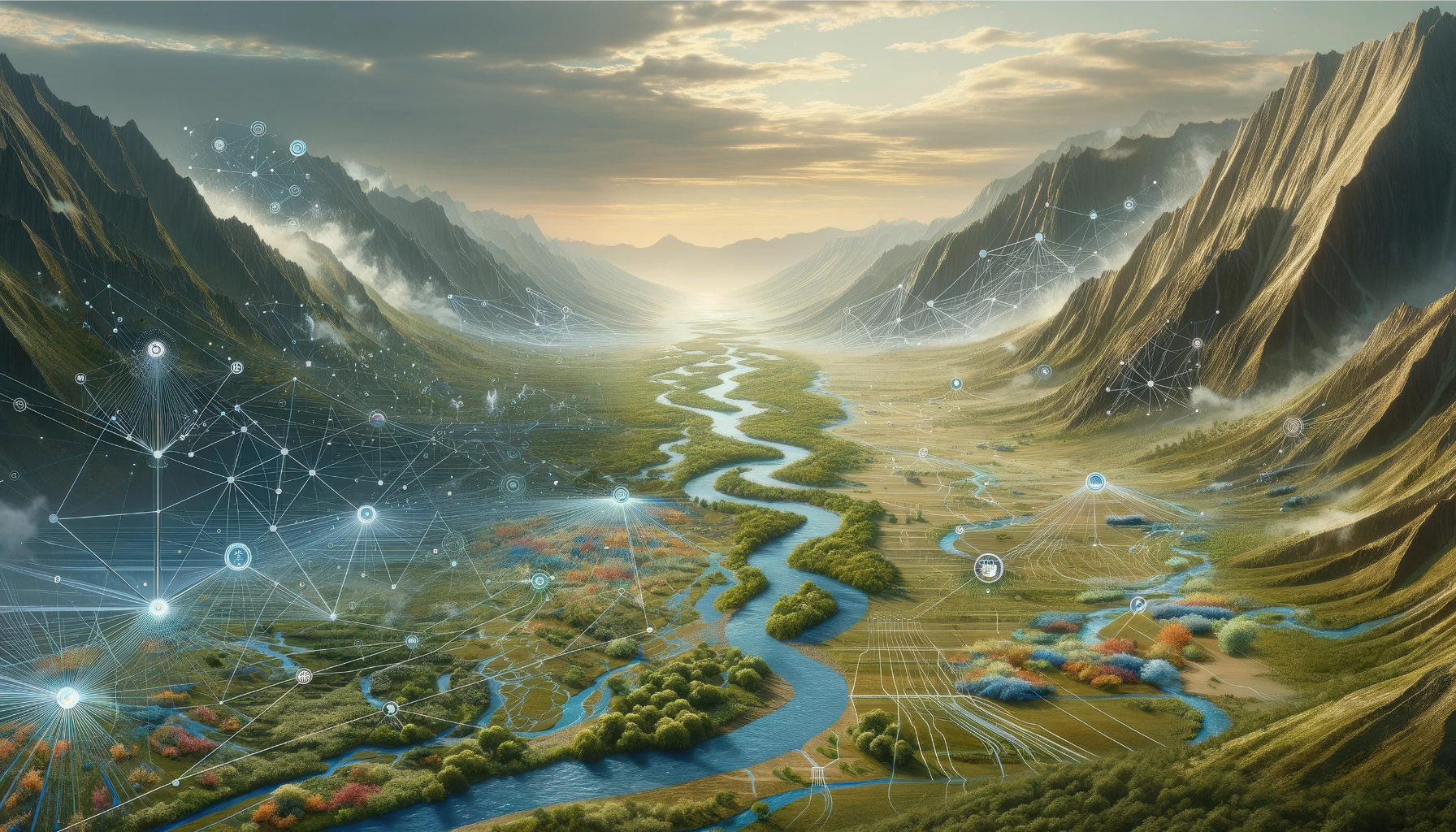
This is an interactive map of my life’s work - not as a timeline, but as a living ecosystem of stories unfolding, intersecting, and evolving over time.
Each node represents a person, project, idea, or turning point. Each connection traces influence - how one experience shaped another, how ideas evolved and how learning turned into action.
The maps below are fully explorable. You can move freely, click into stories, essays, and videos, and follow whatever thread pulls at you. There’s no prescribed path.
As new stories are added, the ecosystem evolves - connecting past to present, ideas to action, people to consequence.
Why I Built This
If you want the backstory behind why this exists, click the (+) below.
-
I didn’t set out to build a map.
I was trying to explain myself - to employers, collaborators, and sometimes to myself - and kept running into the same problem: linear stories couldn’t hold nonlinear lives.
Résumés reduce people to timelines. They privilege continuity, titles, and clean progression. They erase risk, contradiction, and the invisible work that actually shapes outcomes. They struggle to account for pauses, pivots, failures, side paths, or the way one quiet moment can quietly set up another years later.
I felt that gap acutely while applying for roles. The work I was proud of - building movements, designing systems, navigating uncertainty, connecting people across disciplines - didn’t translate well into bullet points. What mattered most to me wasn’t what came next, but what influenced what.
I have an undergraduate degree in Ecological Design and an MBA in Sustainability and Transformational Leadership. While creating this, I was also studying systems thinking, historical bias, metaphysics, and how narratives shape perception. I became increasingly aware that linear storytelling doesn’t just flatten individuals - it distorts history, power, and value.
So instead of asking, How do I summarize this?
I asked, What if I showed how it actually connects?This ecosystem began as a private experiment. Over time, it became a way to see and show patterns I couldn’t otherwise see — how learning compounds, how values persist across contexts, how change moves through networks rather than ladders.
This isn’t a résumé. It’s not a timeline.
It’s a living system - and an attempt to tell the truth about how work, meaning, and influence actually move through the world.
How to Use the Map
🖱️ Click and drag to move through the system
🔍 Scroll to zoom in and out
📌 Click on any node to open its story, media, or reflection
🌱 New nodes appear over time — check back often
Ecosystem of Change
3D Beta 1.0
This is an early 3D visualization of the Ecosystem of Change, an experiment in showing how stories accumulate, intersect, and reshape one another over time.
Each node links to a deeper story. As new work is added, the system grows outward, not upward.
You’re watching a body of work organize itself in real time.
Use this view when you want to watch a body of work organize itself over time —
growing outward rather than upward.
Ecosystem of Change
2D Beta 2.0
This is the 2D companion to the larger ecosystem — a navigable map of stories, projects, and ideas as they connect over time.
Click into any node to trace how one moment led to another. Follow the threads that interest you. Ignore the rest.
The map expands as new stories are added. There is no final version.
Use this view when you want to trace influence, sequence, and causality — how one moment led to another.
This map traces my life and work from youth through 2013 — not as a straight line, but as an ecosystem.
People, projects, movements, failures, and turning points are shown as interdependent nodes. The lines between them represent flow: influence, learning, risk, and consequence.
Seen this way, no experience stands alone. Progress emerges through relationships, not milestones.
This is the foundation of what I call Plane Theory: understanding growth not as ascent, but as navigation through overlapping systems.
Use this view when you want to understand where this ecosystem came from — before it was intentional.
Ecosystem of Change
Relations, Life & Work Map
(Youth → 2013)
Could This Exist for You?
Every ecosystem looks different.
Some are personal - shaped by choices, risks, and turning points that never fit neatly on a CV.
Some belong to teams or organizations - where culture, strategy, and execution intertwine in ways charts can’t capture.
Some are projects, movements, or bodies of work that only make sense when seen as a whole.
Over time, people exploring these maps have asked a similar question:
Could something like this exist for my own life or work?
The answer is yes - though it would never look like this one.What matters isn’t the format. It’s the process.
Slowing down, tracing connections, surfacing invisible influence, and telling a story that reflects how change actually happens.Curious what your ecosystem might reveal?
Whether for yourself, your organization, or a project you’re building - you’re welcome to reach out.No pitch. No template. Just a conversation about what wants to be seen.