(everything on this website was made by me)
Plane Theory
a new approach to
understand and communicate transformation
Plane Theory is a conceptual framework developed by me, Zach Carson, to explore and map the profound impact of individual legacies on the collective reality of human societies. This section introduces, explains, and celebrates Plane Theory, highlighting its correlations with existing theories in physics and its potential implications for individuals and humanity as a whole. We will explore how Plane Theory can create new methodologies for storytelling, eliminate historical biases, and utilize advanced technology to map multiple realities simultaneously.
Understanding ‘Planes’
In Plane Theory, a "plane" represents a system, structure, or context within which individual legacies are framed. These can include social, economic, environmental, cultural, and other significant domains. Throughout their lifetimes, individuals impact multiple planes through their experiences and actions. By mapping these impacts and their intersections, Plane Theory provides a comprehensive view of how individual legacies shape our collective reality.
Understanding planes is crucial for identifying the various contexts in which individuals operate and influence. This holistic approach acknowledges the complexity of human interactions and their broader impacts on society. By visualizing these connections, Plane Theory helps to uncover the intricate web of relationships that define our collective history and future.
Applying Plane Theory
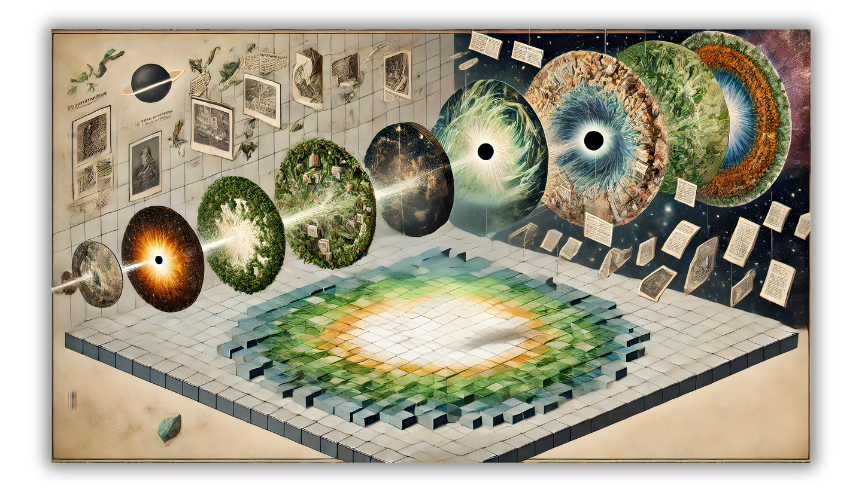
Interconnectivity: Plane Theory emphasizes the interconnected nature of individual experiences, showcasing how different aspects of one’s life - career, family, values, passions, and activism - intersect and influence each other.
No Beginning and End: Plane Theory reflects the non-linear nature of life, and therefore reflects the reality there is no true fixed starting or ending point to our individual experiences or lifetimes.
Eliminating Chaos: By drawing users into a cohesive ecosystem, Plane Theory is designed to create a more intentional and meaningful narrative experience, reducing the noise and fragmentation created by social media.
Individual Story Framed by Plane of Impact: Each personal narrative is contextualized within the specific planes it influences, offering a deeper understanding of its broader impact.
Foundations of Plane Theory
Understanding Planes: The various systems, structures, and contexts within which individual legacies are framed.
Visualizing Change in the Fourth Dimension: Incorporating the temporal dimension to track the evolution of legacies over time.
Linear vs. Non-Linear: The significance of non-linear perspectives in understanding and communicating complex narratives.
Ecological Design: Principles of sustainability, interconnectedness, and resilience that guide the creation of systems in harmony with natural processes.
Example: Approaching Career through a Non-Linear Lens
This visualization is an example of systems thinking applied to a personal history. Each node represents a variable - a person, project, or event - and the lines between them trace flows of influence and transformation. When viewed as an ecosystem, the map reveals the interdependence of seemingly separate experiences. This is the foundation of Plane Theory: shifting from a linear model of progress to a relational model of emergence and connection.
How to Use the Map
🖱️ Click and drag anywhere to move around
🔍 Scroll to zoom in and out
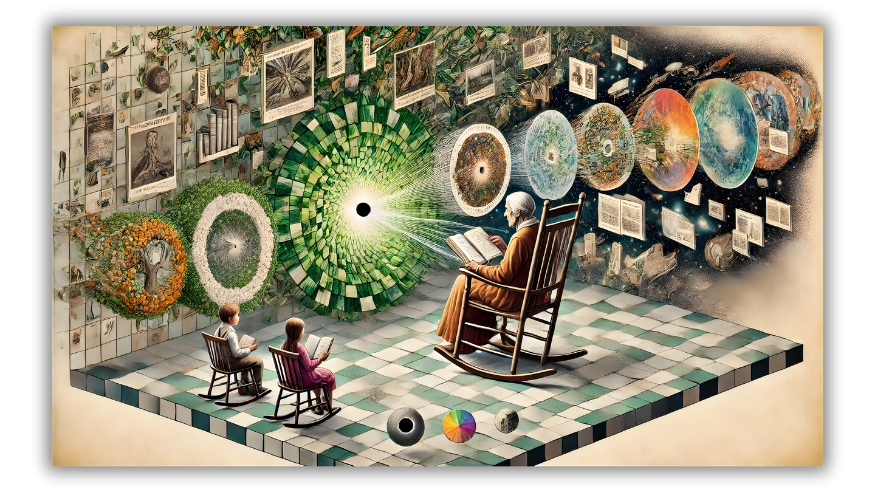
Visualizing Change in the Fourth Dimension
The fourth dimension extends beyond the familiar three-dimensional space we inhabit, adding a new layer of complexity to our understanding of reality. In the context of Plane Theory, the fourth dimension is essential for visualizing the dynamic and interconnected nature of individual legacies and their impacts across various planes. This dimension allows us to map not just static points in space, but the evolution of relationships and influences over time, providing a richer and more comprehensive view of change and progression.
By incorporating the temporal dimension, Plane Theory enables a deeper understanding of how individual actions and experiences evolve. This dynamic mapping helps to identify long-term trends and pivotal moments, offering predictive insights that can guide more effective decision-making. Understanding change over time is crucial for grasping the full scope of individual and collective impacts.
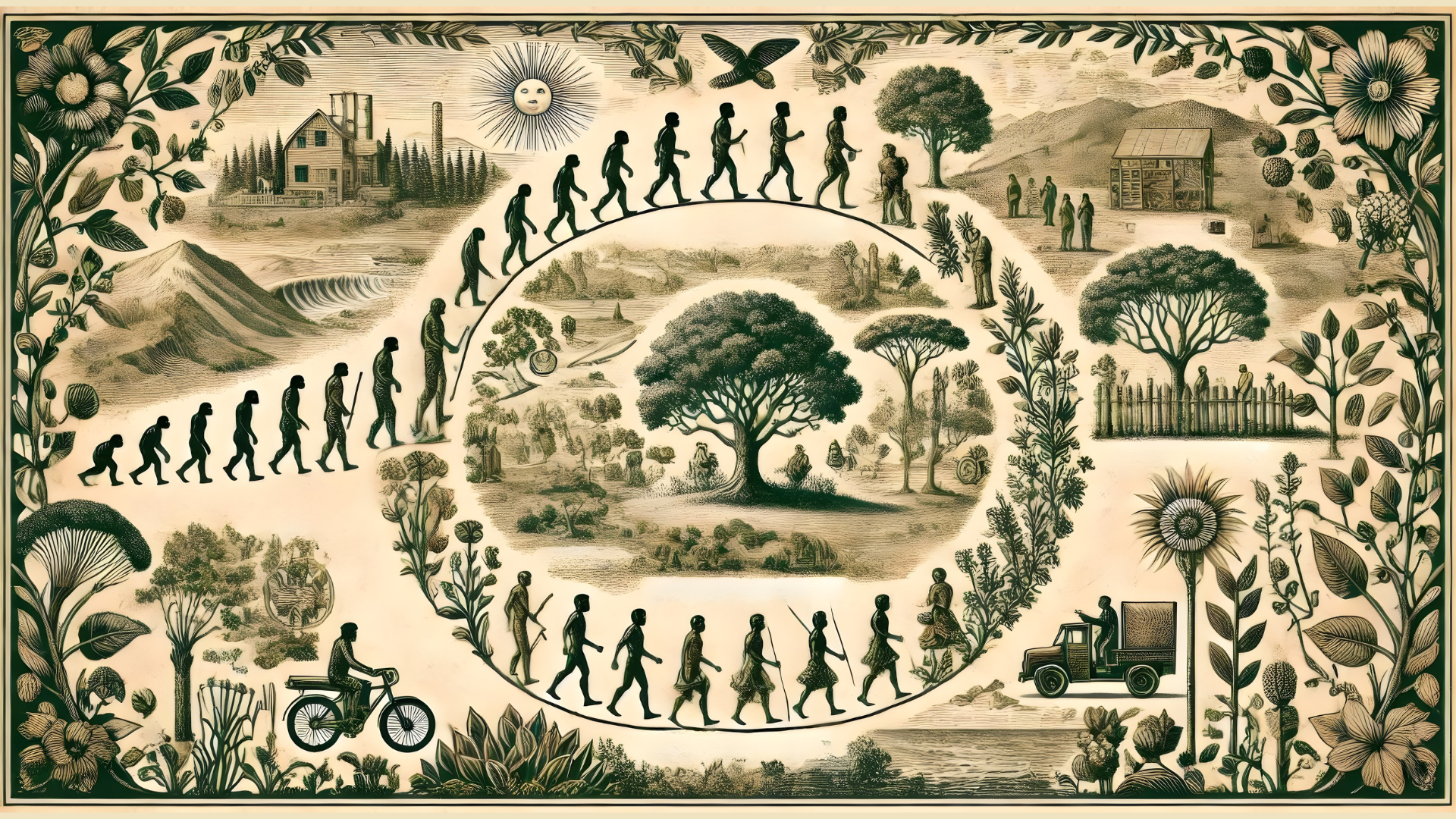
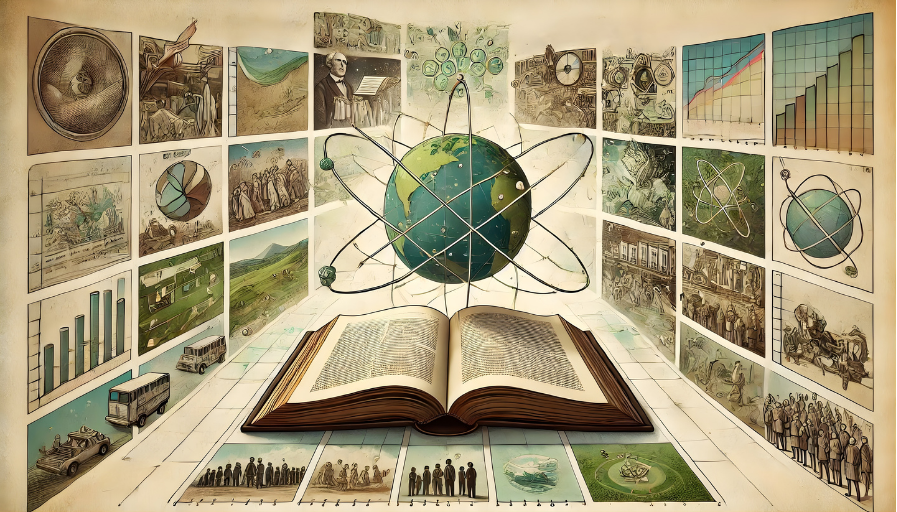
Linear vs. Non-Linear
The distinction between linear and non-linear concepts is fundamental to understanding different ways of perceiving and communicating reality. Linear concepts involve a direct, sequential progression from one point to another, often following a clear and straightforward path. In storytelling, linear narratives unfold in chronological order, with events occurring one after another in a cause-and-effect relationship. Non-linear concepts, on the other hand, do not follow a straight path. They may involve jumps in time, fragmented sequences, multiple perspectives, and complex structures. Non-linear storytelling breaks away from chronological order, creating a more dynamic and multifaceted narrative.
Non-linear communication is essential for capturing the complexity of real-life experiences and interactions. By presenting multiple perspectives and layers, non-linear narratives foster a more holistic understanding of complex systems and narratives. This approach also encourages innovation and creativity, helping to uncover new connections and insights that might be missed in a linear framework.
Ecological Design
Ecological design integrates principles of sustainability, interconnectedness, and resilience, emphasizing the need to work with natural systems rather than against them. This approach focuses on creating systems that are not only sustainable but also regenerative, enhancing the health and vitality of the environment and communities. Ecological design is guided by principles that reflect the wisdom of natural ecosystems, aiming to create human-made systems that mimic these processes to achieve harmony and balance.
The principles of ecological design align closely with the holistic approach of Plane Theory. By applying ecological design principles, Plane Theory promotes systems that are sustainable, resilient, and regenerative, contributing to the health and vitality of both human and natural communities. This perspective helps to create a more sustainable and resilient future by recognizing the interconnectedness of all life and shifting our perception of nature from a commodity to a partner.
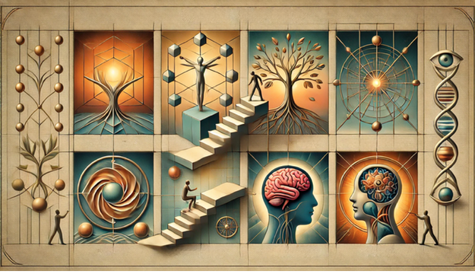
Correlations with Physics
"Correlations with Physics" is crucial for understanding how Plane Theory aligns with and builds upon historical and contemporary scientific theories. By examining the parallels between Plane Theory and key concepts in physics, we can better appreciate its significance and potential impact. Historical theories in physics, such as Einstein's theory of relativity and string theory, have profoundly transformed our understanding of time, space, and the fundamental nature of the universe. These breakthroughs not only advanced scientific knowledge but also reshaped our philosophical and metaphysical perspectives on reality.
Plane Theory represents a novel approach to understanding human experience, connection, and the collective impact of humanity. By drawing on the rich legacy of physics and metaphysics, we aim to highlight its transformative potential as a tool for understanding and addressing the intricate challenges of our world. This exploration will underscore Plane Theory's relevance and its capacity to foster a deeper, more holistic comprehension of individual and collective impact.
The evolution of communication technologies has played a crucial role in accelerating human progress. Innovations that increase the speed and distance of communication have facilitated the rapid dissemination of knowledge, fueled economic growth, and influenced cultural development. However, these advancements also pose challenges that need to be addressed to ensure equitable and positive outcomes for all members of society. As technology continues to evolve, so too will the methods and impact of storytelling, shaping the future of human communication in unprecedented ways.
This comprehensive new framework and applied understanding underscores the dynamic relationship between storytelling and technology. The future promises exciting advancements that will fundamentally reshape how narratives are created, shared, and experienced. The Ecosystem of Change is my prototype to address these concerns, bringing a new paradigm to life.
