The Moment US Politics Embraced Sustainability…
And How I Helped
It’s wild to look at my resume and see one clean line: Producer - Democratic and Republican National Conventions (2008).
Three bullet points underneath it. Neat. Contained. Sanitized.
What it doesn’t say is that I was 26 years old, furious, and way out of my league, and that the whole thing started because no one was talking about sustainability.
The Spark
It was 2008. Obama versus McCain. And I couldn’t believe that neither party, not the Democrats with their shiny new hope campaign, nor the Republicans clinging to the old world order, had a single meaningful policy plank about climate change or sustainability. Not one.
I’d just spent the last two years traveling the country with the Sustainable Living Roadshow, turning festivals and college campuses into eco-villages powered by solar panels and vegetable oil. Before that, I’d converted a school bus and toured America teaching about peak oil. I’d been to the 7/7/07 Live Earth inception meeting (by total accident) and brought a plan for biofuels to the Ghanian government while managing an afro-beat band throughout West Africa (a wild story for another time).
The movement was rising. The science was clear. And yet, silence from the political stage. So I started calling the Democratic National Committee. And calling. And calling. Every day for weeks, climbing the ladder from interns to assistants to decision-makers until I finally landed on the right person.
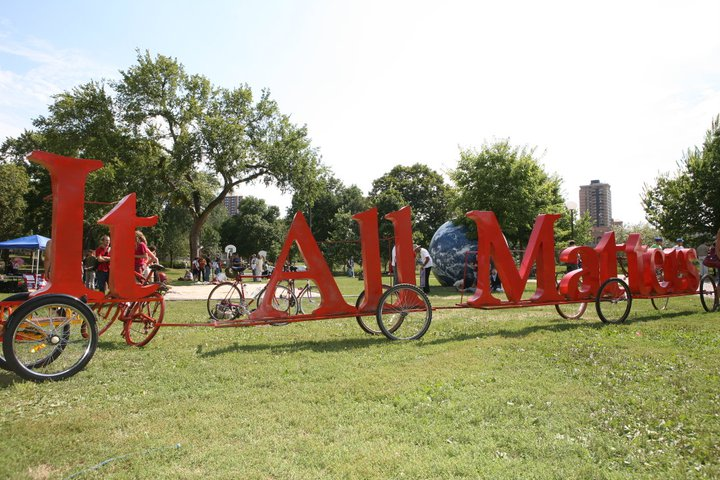
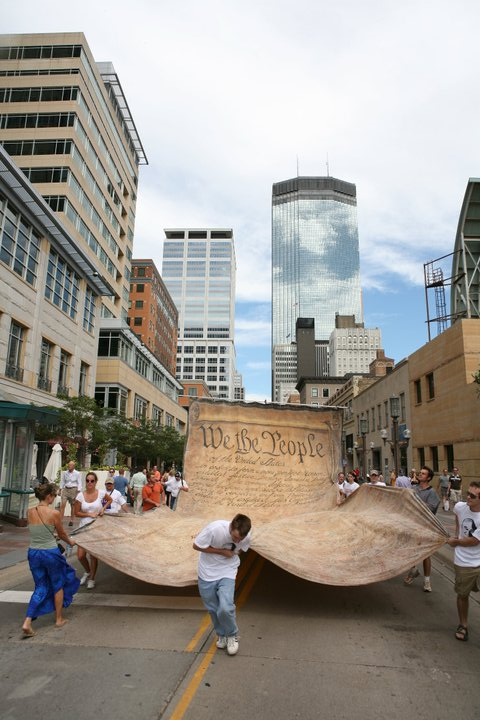
My pitch was simple: “If sustainability isn’t part of your platform, you’ll lose the youth vote - and more importantly, the future.” Something in the message landed. They agreed to meet. Then they agreed to partner. And just like that, I was 26 years old and a partner of the Democratic National Convention. They gave me three city blocks in Denver’s Highlands district for a three-day Sustainability Street Fair — plus an official co-producer title for the Green Business Expo on the DNC lawn.
Then I Called the RNC
Because that’s what made sense. If we were going to talk about sustainability, it had to be omni-partisan. Bigger than politics. So I called the Republican National Committee. Same story. Same persistence. Same pitch - this time with leverage.
“The DNC just made sustainability an official part of their convention. If you don’t, you’ll lose the same generation they’re about to inspire.”
A week later, I was officially partnered with the RNC too, granted the Capitol Mall in St. Paul, the only permitted event space within eyeshot of the Republican National Convention.
Looking back, that moment marked the first time either party had integrated sustainability into its official convention program. And I hadn’t just witnessed it, I’d helped make it happen.
What That Line on my Resume Really Means
When I tried to fit that story into a traditional job application years later, it shrank to a sterile line of text. No context, no chaos, no proof of the sleepless nights or the conviction that fueled them.
That’s why I built The Carson Paradox and the Ecosystem of Change. Because a two-page resume can’t hold a life lived in motion. This story is one branch of that ecosystem, a node that connects to others: the Veg-E-Bus, Live Earth 7/7/07, Rage @ the RNC, Sustainable Living Roadshow.
Each is a doorway into another layer of the same system, a web of cause and effect, of belief and execution, of chaos and connection. Follow any one of them, and you’ll find the same pattern: naïve conviction meeting institutional resistance, vision colliding with logistics, and somehow, miraculously, it works.
That’s what this whole project is about. Not résumé lines. Not job titles.
But the ecosystems of change we create when we refuse to wait for permission.