How a college thesis,
a broken-down bus,
and blind faith,
launched a movement.
University of Vermont
Senior Thesis, 2005
In 2003 at the University of Vermont, I was buried in research about something called peak oil, the idea that the world’s supply of fossil fuel would soon peak, collapse, and forever alter modern civilization. It hit me like a freight train: how did no one know this? My classmates, my professors, my family, everyone was living like the world had endless gas in the tank. And that’s when something inside me clicked.
If people didn’t know, then I needed to tell them.
That year, I went abroad to study Tropical Ecology and Sustainable Development in Costa Rica. Somewhere between jungle hikes and lectures about biodiversity, I stumbled upon a story that felt like a calling: a group of travelers from California had driven all the way to Costa Rica on a bus powered entirely by vegetable oil.
They called themselves the Sustainable Solutions Caravan.
They weren’t just touring, they were teaching farmers about pesticides, hosting drum circles, shooting documentaries, and running their bus on literal French fry grease.
So I convinced my professor to take a class field trip to meet them in Nicaragua. When we arrived, the scene looked like something between a circus and a revolution: dreadlocked mechanics under the bus, drummers keeping time, solar panels glinting in the sun. They were dusty, brilliant, idealistic, and very much alive.
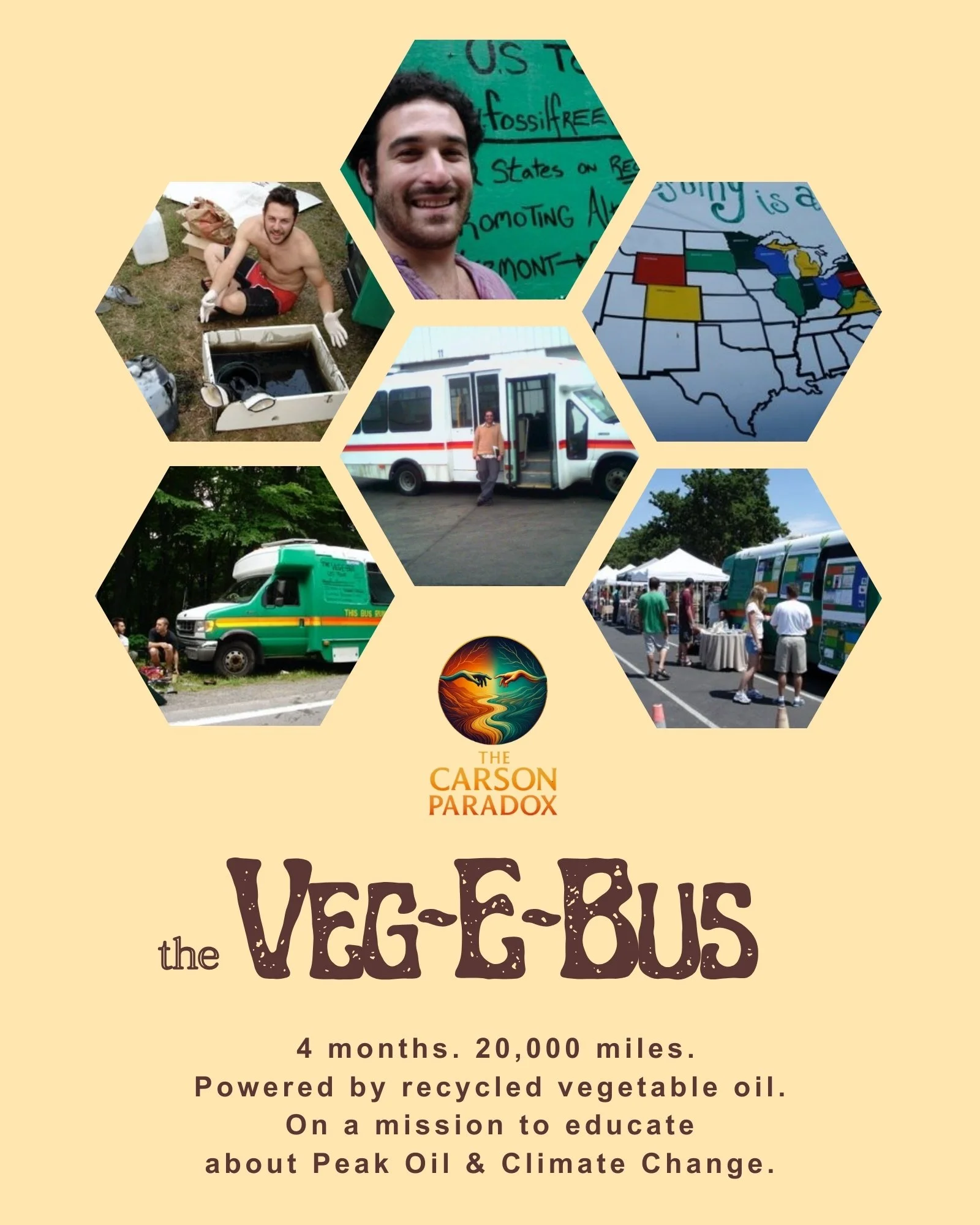
That’s where I met Steven Brooks, the visionary founder, and Ryan Grace, the mechanic who could turn waste oil into fuel and dreams into engines. In that moment, I knew what my thesis would be: I would build an educational program on peak oil, convert a school bus to run on vegetable oil, and drive across the country teaching people what I’d learned.
It sounded insane. So of course, I did it.
Back at UVM, I sent an email to every professor I could find looking for an advisor. One name I didn’t recognize, Fred Schmidt, replied. Turns out, Fred was on the Board of the Community Transportation Association of America (CTAA).
He loved my idea. And more importantly, he had connections.
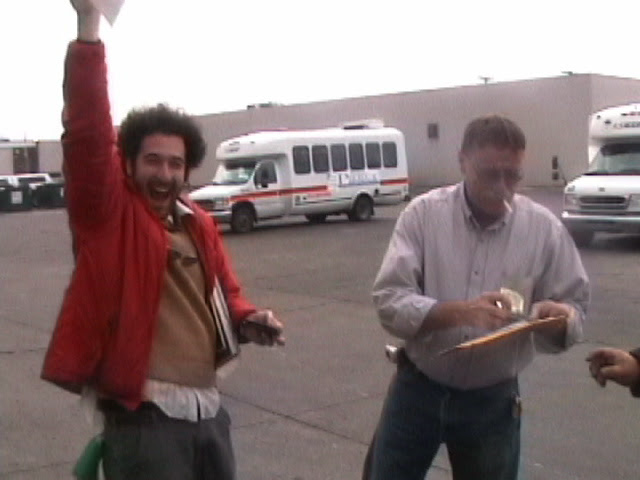
After weeks of back-and-forth, Fred helped me secure something unbelievable: a donated bus from a group in Michigan.
I had no idea how to convert it. No idea how to fix it. I didn’t even know the difference between gas and diesel engines.
I had no idea what I was doing.
But I had a bus. So the journey began.
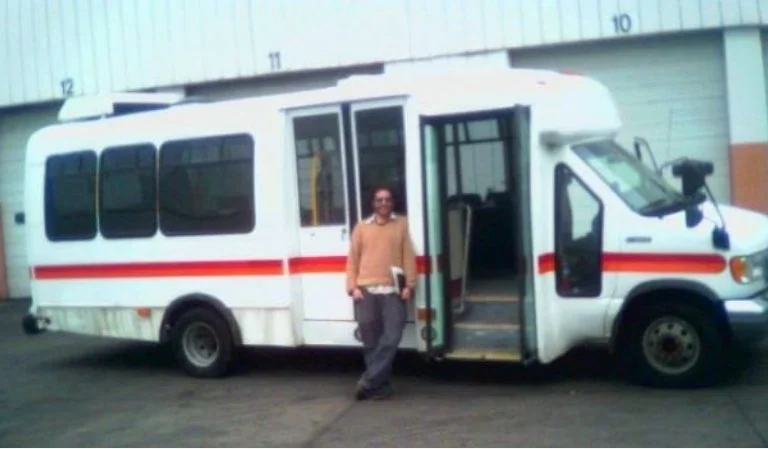
My mom didn’t want me going alone, so she bought a plane ticket for my roommate Jefe to come with me. We flew to Michigan, got a ride to the CTAA lot, and there she was, my bus.
It felt like a spaceship. Like freedom on wheels.
The mechanic handed me the keys and asked, “Where are your tools?”
I said, “I don’t have any.”
He stared at me like I’d lost my mind.
“You’re flying across the country to pick up a free bus, and you didn’t bring any tools with you?”
“Yeah,” I said. “What could go wrong?”
He laughed, shook his head in disbelief, gave us a small wrench set, wished us luck, and sent us off.
We blasted Talking Heads’ Road to Nowhere, two 20-year old’s driving a donated bus home from Michigan like we were leading the resistance.
Then, no more than 60-miles down the road, smoke started pouring out of the vents.
We pulled over on the side of the highway, popped the hood, and stared at an engine we didn’t understand. I found a broken hose leaking fluid, no clue what kind.
So I left Jefe in the bus and ran down the highway toward a farmhouse we’d passed miles back. I knocked on the door, explained my situation, and somehow, miraculously, they had a few spare tubes in their barn.
They fit. I replaced the hose with the free tools the mechanic had given me. It worked. Until about 60-more miles down the road, the bus wouldn’t start again.
A local mechanic stopped, showed us a trick: jump the starter manually with a spare battery. It was dangerous, but it worked. He told us, “Don’t ever turn it off again or it won’t turn back on.” So we didn’t.
We drove for hours, wired on caffeine pills, alternating turns sleeping in the passenger seat, stopping only for food and fuel. When we finally reached Niagara Falls, we realized we couldn’t turn the bus off, so we took turns seeing the Falls while the other stayed behind to keep it running.
Eventually, we made it back to Vermont. I parked it in our driveway, killed the engine, and that’s where it stayed, unmoved for the rest of the semester.
That bus became more than my thesis project.
It was proof that ignorance and enthusiasm can coexist, that sometimes, the universe rewards courage over competence.
I learned how to convert engines to grease, how to build a motor-home, how to cold-call sponsors, how to raise money, how to lead. I learned that the harder I pushed, the more the universe pushed back, not to stop me, but to shape me.
That bus taught me resilience, improvisation, faith, and how to trust that when the next step isn’t clear, it’ll appear when you move toward it anyway.
Looking back, that was the beginning of everything that followed — the Sustainable Living Roadshow, the DNC / RNC projects, the GMO Right2Know March, and every other wild chapter that would become part of my Ecosystem of Change.
It was the end of my East Coast life, the beginning of my California one, and the first time I truly understood what it means to live inside The Carson Paradox:
That sometimes, the path only appears after you start walking it. And sometimes, it looks like a broken-down bus running on vegetable oil. Whatever it is, if you say fuck it, and do it anyway, you’ll get somewhere, somehow.